I. The Cultural Fabric: Order, Reserve, and the “Distance of Conversation”
Walking through Tōhoku—especially Sendai and Ishinomaki—the strongest cultural impression is a lived sense of order. In stations and small gathering spaces alike, layouts feel clean, simple, and deliberately arranged. Interactions are courteous and measured, often carried by gentle tones and careful phrasing. Japan’s conversational style tends to respect the “place” and relationship network of each encounter; people calibrate formality and word choice to preserve harmony. This produces familiar features to visitors: pauses, understatement, and an attentiveness to context—what some describe as “reading the air.”
On the ground, I felt how even dense pedestrian flows move with clarity, and how disagreement rarely becomes loud or hurried. This fabric steadies the city and its routines. It also means that outsiders need time to grasp what is implied beneath what is said.

II. Urban Form and Everyday Life: Sendai as an Example
As the largest city in Tōhoku, Sendai concentrates daily living and commerce around its station. Covered arcades and multi-level complexes (from the station-connected malls to streets of small shops) make everyday errands walkable. The west-side shopping arcades are lively without being loud—“busy but not bustling.” Together, the station hub, street-front arcades, and family-focused facilities at the urban fringe create a balanced rhythm: people can navigate most needs within a comfortable pedestrian scale, while weekend traffic disperses toward larger family destinations.
III. The Physical Shock of the Tsunami: Numbers, Landforms, and Differences

The 2011 Great East Japan Earthquake and tsunami devastated Tōhoku’s coast with destructive force. Technical accounts record extreme heights at certain northern inlets and broad inundation on flatter plains to the south. Steep ria coasts amplify energy as waves funnel inland; low-lying plains see water travel far, shallow, and wide. Even robust infrastructure and coastal forests can be overtopped when forces exceed design assumptions.
In the memorial spaces, seeing “ten-meter” markers, fallen steel, and long waterlines turns the abstract into visceral comprehension. You realize the scale of energy and why purely structural answers can be outmatched in rare extremes.
IV. Two School Stories in Contrast: Education, Decision-Making, and the Line Between Life and Death
Post-disaster learning often highlights two contrasting school cases: the “Kamaishi Miracle” and Ishinomaki’s Ōkawa Elementary School.
- Kamaishi Miracle: Years of “attitude-oriented” disaster education—training students to reject assumptions, do everything possible, and take the lead—meant that on March 11, nearly three thousand elementary and junior high students evacuated swiftly and safely. It shows how disaster education before leads to correct action during.
- Ōkawa Elementary: Decision delays and route misjudgment led to heartbreaking loss. The preserved ruins and museum speak of grief, accountability, and the imperative of decisive evacuation under uncertainty. When time is short and information incomplete, leadership, communication, and a “move first” mindset can mean the difference between life and death.
V. Memory Landscapes and Public Learning: Ishinomaki’s Narrative Route
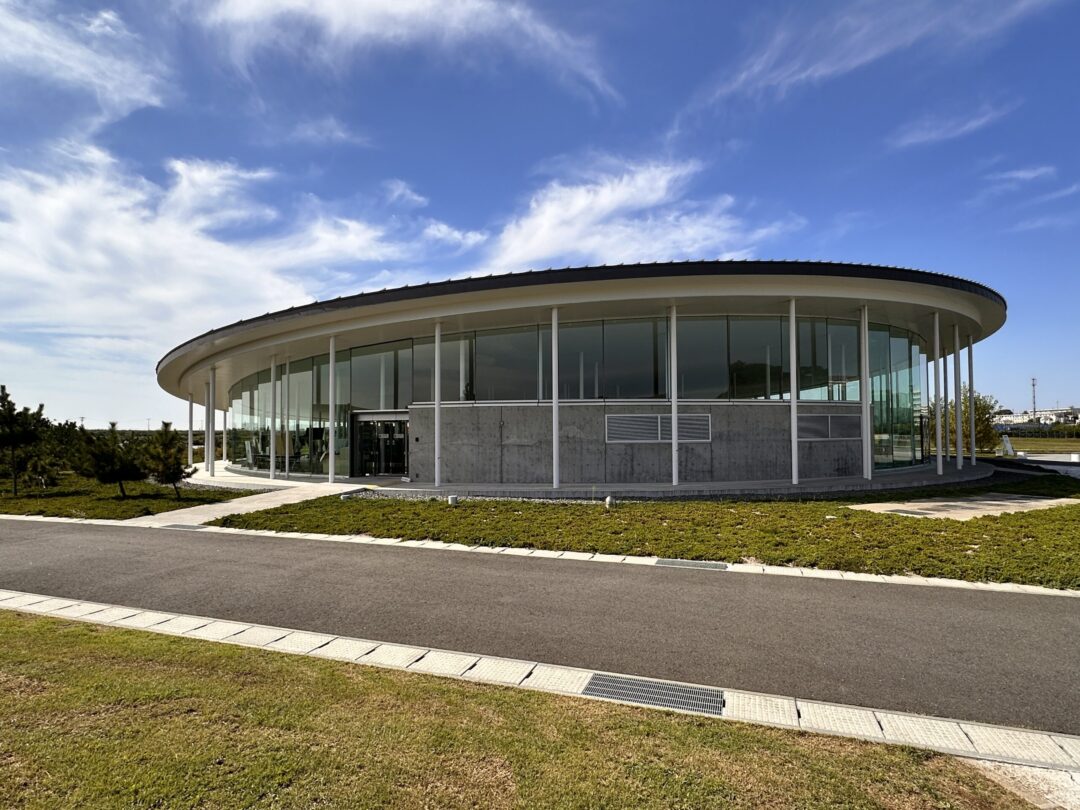
In Ishinomaki, the Minamihama Tsunami Reconstruction Prayer Park and the Miyagi 3.11 Tsunami Memorial Museum form a thoughtful circuit—walking into memory, learning the lessons, and facing the future. Architectural gestures (such as rooflines set to the local peak height) and pathways guide visitors across spaces of lament and understanding. It turns disaster education into a walkable narrative, where the event is more than numbers: it is the living pain and reweaving of a community.
The region also develops BOSAI + Tourism (Disaster Prevention + Tourism), connecting memorials with practical elements—evacuation hills, vertical-evacuation buildings, coastal levees, storytellers—so public learning is not limited to classrooms and pamphlets.


VI. Reconstruction in Motion: From “Hardware Recovery” to “Whole-of-Society Resilience”
National efforts since 2012 have unfolded in phases, focusing first on concentrated rebuilding and later on revitalization. Housing and infrastructure saw broad completion; evacuees decreased dramatically from peak levels as communities settled. Yet Fukushima’s recovery horizon remains longer, and livelihoods continue to need support.
At the city level, Sendai’s “multiple defenses” combine:
- coastal levees and disaster-prevention forests,
- evacuation hills and vertical-evacuation buildings,
- elevated roads and designated evacuation routes,
- inland relocation in vulnerable zones.
The aim is to prepare for a “once-in-several-hundred-years” tsunami with layered defenses, while coupling resilience with decarbonization and distributed energy. Policy and practice align with the global banner of “Build Back Better”, blending stronger infrastructure, education, and community participation to form risk governance that outlasts the headlines.
Water-resource and river-basin initiatives likewise emphasize whole-basin resilience by all: laws, local education, and drills that assume beyond-design events, so safety is never defined only by structural thresholds.

VII. Lingering Issues: Demographics, Psychological Recovery, and Social Connection
Recovery is more than roads, homes, and industries; it also includes people, especially their social ties and mental wellbeing. Japan has elevated loneliness and isolation as a whole-of-society challenge, with policy support for local councils and trained supporters. Surveys show large portions of the public feel loneliness at least occasionally, with higher rates among young adults and working-age populations. Among seniors, social isolation and loneliness correlate with health and socioeconomic status—and post-disaster relocation can fray support networks further.
These “invisible tsunamis” require steady community engagement, accessible mental health services, and public spaces that welcome participation. The reconstruction of hardware is measurable; the restoration of hearts and networks is slower, quieter, and no less vital.⸻
Between Impermanence and Reconstruction, Living Hope and Love

1) Facing Impermanence: Questions of Death and Hope Ruins and museums force us to face ultimate questions. For Christians, hope points beyond our projects to the Lord of life and history. That hope does not evade reality; it anchors us to take suffering and responsibility seriously—to persist in doing good, to endure, and to wait even in the dark.
2) Leadership and Choice: “Act First” and “Protect Each Other” in Crisis Education saved lives in Kamaishi; indecision cost lives at Ōkawa. Christians in positions of leadership—at work and in neighborhoods—can embody peacemaking by protecting the vulnerable and acting decisively: plan and practice early; prioritize children, elders, and those under emotional strain when disaster comes.
3) Build Back Better and “Renewed Living” “Build Back Better” can become a spiritual discipline:
- Work: pursue justice and integrity; resist shortcuts and short-termism.
- Community: commit to both hardware (safe facilities) and software (mutual-help networks).
- Creation care: honor the world we steward; practice sustainable choices.
4) The Long Tail of Loneliness: How the Church Can Carry Connection If society names loneliness as a public issue, the church can carry connection:
- Small-group companionship: steady rhythms of sharing and support across stress, work, marriage, and parenting.
- Open spaces: low-threshold events—reading circles, craft sessions, parent–child gatherings—for neighbors, the underserved, and cross-cultural friends.
- Referral and professionalism: work with social workers, healthcare, and counselors; avoid over-spiritualizing complex mental-health needs.